본문바로가기

About Us

Check the latest news from Yujin SMRC Automotive Techno.

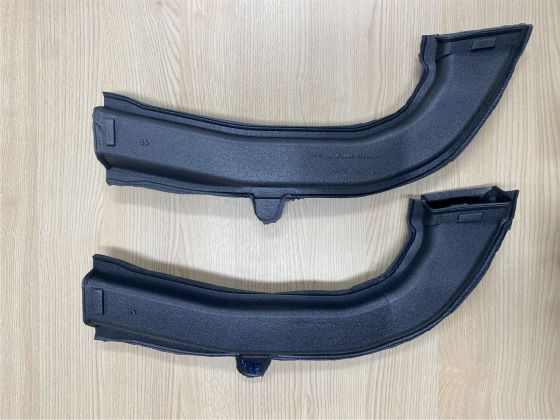
The Korea Institute of Machinery and Materials, Yujin SMRC Automotive Techno Co., Ltd., and SH Korea have developed a lightweight, airtight air duct using foam sheet material, with plans to supply it to major domestic automobile manufacturers in the future.


경량화 에어덕트 시제품/사진=기계연

Lightweight Air Duct Prototype / Photo = Korea Institute of Machinery and Materials

A lightweight, airtight air duct that can be directly applied to commercial vehicles has been developed. The technology is expected to help localize production by replacing existing French-made air ducts and enhance the self-reliance of Korea’s automotive industry.


On the 2nd, a research team led by Senior Researcher Bae Seung-hoon at the Busan Machinery Technology Research Center of the Korea Institute of Machinery and Materials (KIMM), together with Yujin SMRC Automotive Techno (hereinafter Yujin SMRC A.T) and SH Korea, announced that they have significantly improved the manufacturing technology for air ducts used in automotive cockpit modules and satisfied automaker performance standards in evaluations, bringing the product close to commercialization.


A cockpit module refers to the integrated base unit of key components that make up a vehicle’s driver seat area. It includes the instrument panel, HVAC system, radio, clock, and small storage compartments. Designed to allow drivers to easily operate functions and check information, it is a highly important component in terms of design, convenience, and safety.


Conventional air ducts are made of high-density polyethylene (HDPE), making them heavy and lacking sufficient thermal insulation performance, which results in significant heat loss. They also present issues such as inconvenience during assembly and noise generation. These problems have led to reduced fuel efficiency and decreased ride comfort. Additionally, there have been safety concerns, as the ducts can break during accidents and potentially injure the driver.


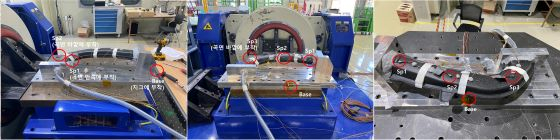
경량화 덕트 진동평가/사진=기계연

Lightweight Duct Vibration Test / Photo = Korea Institute of Machinery and Materials


The air duct developed by the joint research team utilizes foam sheet material, reducing its weight by approximately 60% compared to existing products, while significantly improving airtightness, noise reduction performance, and safety.


The new air duct was manufactured using vacuum forming and a hot-knife process applied to foam sheets. Compared to conventional blow molding, this method reduces defect rates and enables the precise implementation of complex shapes, greatly enhancing productivity. In addition, by using polyethylene (PE) foam material, the team improved thermal insulation performance and maximized noise reduction effects, thereby enhancing both fuel efficiency and ride comfort.


The research team preheated the PE foam sheets and formed the shape using suction on upper and lower vacuum molds, while simultaneously bonding the upper and lower foam sheets through compression. The process also includes a post-treatment stage in which the edges are precisely trimmed using a hot-knife process.

The joint research team then conducted performance evaluations to verify the reliability of the developed air duct and confirmed that it meets automaker standards. During this process, they also secured technology to extract the dynamic properties of polymer structures such as PE and polypropylene (PP).


Senior Researcher Bae Seung-hoon of KIMM, who led the study, stated, “This product is expected to address the shortcomings of existing air ducts,” adding, “It can be applied to various vehicle models in the future.” Lim Sung-bin, Head of the Research Institute at Yujin SMRC A.T., said, “Through this development, we have produced a component that excels in quality, cost competitiveness, and weight reduction,” adding, “We will further strengthen our competitiveness not only in the domestic market but also overseas through mass production.”


Source: https://www.mt.co.kr/future/2024/10/02/2024100209124142426


Meaning of a Passage

We value even the smallest questions.